构建有效的 Agents
在最近发布的一篇研究文章 Building Effective Agents 中,Anthropic 分享了关于构建高效大型语言模型 (LLM) 智能体的宝贵见解。这项研究特别值得关注的一点是,它强调简单性和可组合性,而非复杂框架。让我们探讨如何将这些原则转化为使用 Spring AI 的实际实现。
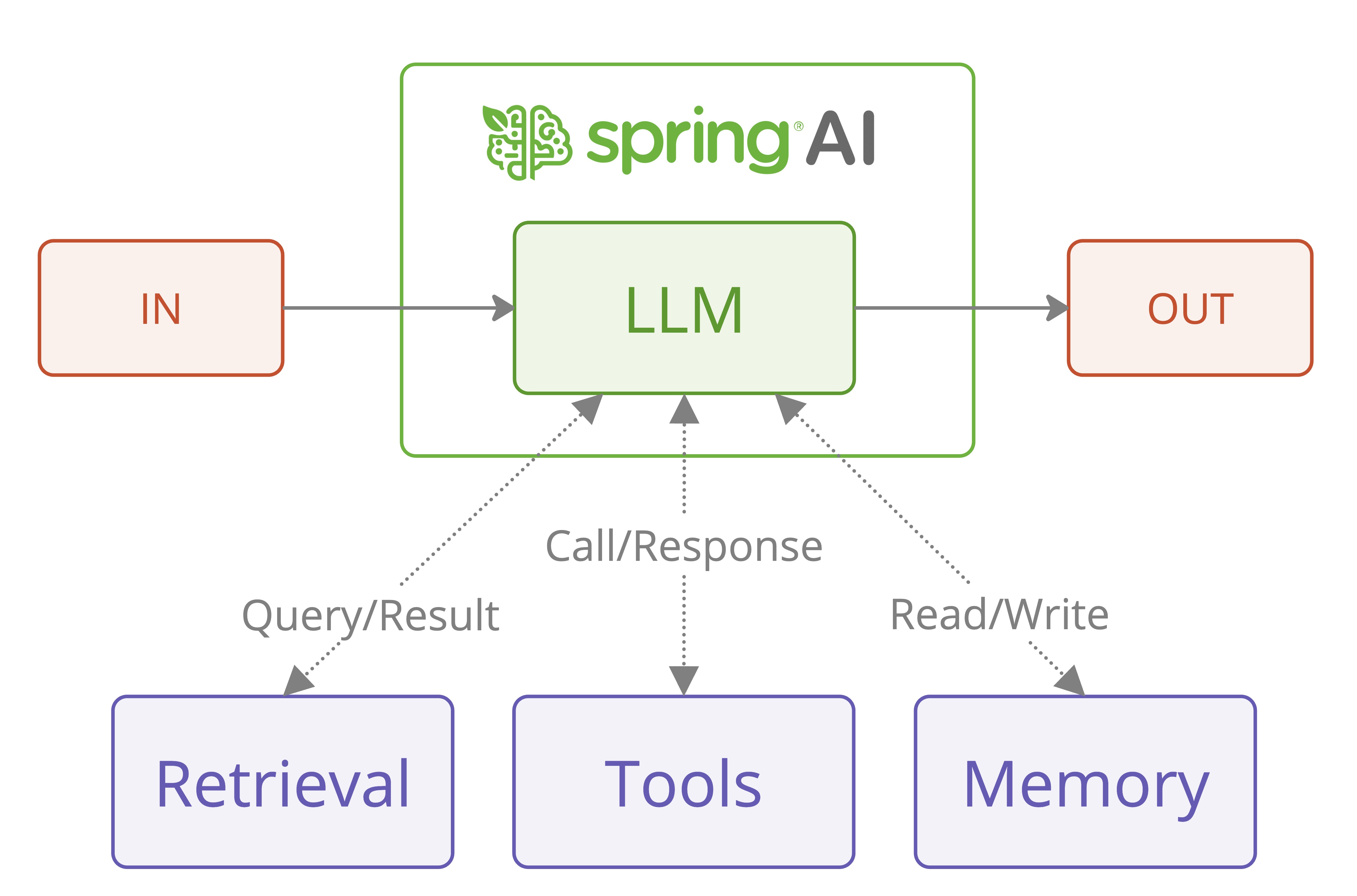
虽然模式描述和图示来自 Anthropic 的原始出版物,但我们将重点介绍如何使用 Spring AI 的模型可移植性和结构化输出特性来实现这些模式。我们建议先阅读原始论文。
spring-ai-examples 仓库中的 agentic-patterns 目录包含以下所有示例的代码。
智能体系统
该研究论文对两种类型的智能体系统作出了重要的架构区分:
-
Workflows:LLMs 和工具通过预定义代码路径进行编排的系统(例如,prescriptive systems)
-
Agents:LLMs 动态控制自身流程和工具使用的系统
关键洞察在于,虽然完全自主的 agents 可能看起来很有吸引力,但对于定义明确的任务,workflows 通常能提供更好的可预测性和一致性。这与企业级需求高度契合,在这些需求中,可靠性和可维护性至关重要。
让我们看看 Spring AI 如何通过五种基本模式实现这些概念,每种模式都服务于特定用例:
1.
Chain Workflow 模式体现了将复杂任务分解为更简单、更易管理步骤的原则。
何时使用: - 具有明确顺序步骤的任务 - 当你想以延迟换取更高准确率时 - 当每个步骤都基于前一个步骤的输出时
以下是 Spring AI 实现中的一个实际示例:
public class ChainWorkflow {
    private final ChatClient chatClient;
    private final String[] systemPrompts;

    public String chain(String userInput) {
        String response = userInput;
        for (String prompt : systemPrompts) {
            String input = String.format("{%s}\n {%s}", prompt, response);
            response = chatClient.prompt(input).call().content();
        }
        return response;
    }
}
该实现演示了几个关键原则:
-
每个步骤都有明确的职责
-
一个步骤的输出会成为下一个步骤的输入
-
该链易于扩展和维护
2.
LLMs 可以同时在多个任务上工作,并且其输出可以通过程序进行聚合。
适用场景: - 处理大量相似但相互独立的项目 - 需要多个独立视角的任务 - 当处理时间至关重要且任务可并行化时
List<String> parallelResponse = new ParallelizationWorkflow(chatClient)
    .parallel(
        "Analyze how market changes will impact this stakeholder group.",
        List.of(
            "Customers: ...",
            "Employees: ...",
            "Investors: ...",
            "Suppliers: ..."
        ),
        4
    );
3.
Routing pattern 实现了智能任务分发,使不同类型的输入能够得到专门处理。
适用场景: - 具有明显不同输入类别的复杂任务 - 当不同输入需要专门处理时 - 当分类可以准确处理时
@Autowired
private ChatClient chatClient;

RoutingWorkflow workflow = new RoutingWorkflow(chatClient);

Map<String, String> routes = Map.of(
    "billing", "You are a billing specialist. Help resolve billing issues...",
    "technical", "You are a technical support engineer. Help solve technical problems...",
    "general", "You are a customer service representative. Help with general inquiries..."
);

String input = "My account was charged twice last week";
String response = workflow.route(input, routes);
4.
何时使用:
- 子任务无法预先预测的复杂任务
- 需要不同方法或视角的任务
- 需要自适应问题求解的场景
public class OrchestratorWorkersWorkflow {
    public WorkerResponse process(String taskDescription) {
        // 1. Orchestrator analyzes task and determines subtasks
        OrchestratorResponse orchestratorResponse = // ...

        // 2. Workers process subtasks in parallel
        List<String> workerResponses = // ...

        // 3. Results are combined into final response
        return new WorkerResponse(/*...*/);
    }
}
使用示例:
ChatClient chatClient = // ... initialize chat client
OrchestratorWorkersWorkflow workflow = new OrchestratorWorkersWorkflow(chatClient);

WorkerResponse response = workflow.process(
    "Generate both technical and user-friendly documentation for a REST API endpoint"
);

System.out.println("Analysis: " + response.analysis());
System.out.println("Worker Outputs: " + response.workerResponses());
5.
适用场景: - 存在明确的评估标准 - 迭代优化能带来可衡量的价值 - 任务能从多轮评审中受益
public class EvaluatorOptimizerWorkflow {
    public RefinedResponse loop(String task) {
        Generation generation = generate(task, context);
        EvaluationResponse evaluation = evaluate(generation.response(), task);
        return new RefinedResponse(finalSolution, chainOfThought);
    }
}
使用示例:
ChatClient chatClient = // ... initialize chat client
EvaluatorOptimizerWorkflow workflow = new EvaluatorOptimizerWorkflow(chatClient);

RefinedResponse response = workflow.loop(
    "Create a Java class implementing a thread-safe counter"
);

System.out.println("Final Solution: " + response.solution());
System.out.println("Evolution: " + response.chainOfThought());
Spring AI 的实现优势
Spring AI 对这些模式的实现提供了若干符合 Anthropic 建议的优势:
<dependency>
    <groupId>org.springframework.ai</groupId>
    <artifactId>spring-ai-starter-model-openai</artifactId>
</dependency>
EvaluationResponse response = chatClient.prompt(prompt)
    .call()
    .entity(EvaluationResponse.class);
-
跨不同 LLM 提供商的统一接口
-
内置错误处理和重试
-
灵活的 prompt 管理
最佳实践与建议
-
从简单开始
-
在增加复杂性之前,先从基本工作流开始
-
使用满足需求的最简单模式
-
仅在需要时增加复杂度
-
为可靠性而设计
-
实现清晰的错误处理
-
尽可能使用类型安全的响应
-
在每个步骤中加入校验
-
考虑权衡
-
平衡延迟与准确性
-
评估何时使用并行处理
-
在固定工作流与动态代理之间做出选择
未来工作
这些指南将更新,以探索如何构建更高级的 Agents,并将这些基础模式与复杂特性相结合:
模式组合 - 组合多个模式以创建更强大的工作流 - 构建混合系统,以利用每个模式的优势 - 创建能够适应需求变化的灵活架构
高级 Agent 记忆管理 - 实现跨对话的持久记忆 - 高效管理上下文窗口 - 制定长期知识保留策略
工具与 Model-Context Protocol (MCP) 集成 - 通过标准化接口利用外部工具 - 实现 MCP 以增强模型交互 - 构建可扩展的 agent 架构
结论
Anthropic 的研究洞察与 Spring AI 的实践实现相结合,为构建有效的基于 LLM 的系统提供了强大框架。
通过遵循这些模式和原则,开发者可以构建健壮、可维护且有效的 AI 应用,在避免不必要的复杂性的同时交付实际价值。
关键是要记住,有时候最简单的解决方案才是最有效的。从基本模式开始,充分理解你的使用场景,只有在确实能提升系统性能或能力时,才增加复杂性。